Category: Worldbuilding

  • Research In Galveston

    Research In Galveston

    Artemis Rising is #860 in Steampunk Fiction, #2,344 in Alternate History Science Fiction (Books), and #799 in Steampunk Science Fiction (Kindle Store). There are 2 customer reviews – if you’ve finished the book and haven’t left a review, please do so.

    In the late Victorian and Gilded ages, the rich and powerful were more likely to have a custom rail carriage built for them. Kind of like having a yacht or private jet today.

    Ran into some major issues with the first chapter of Mirim for the WIN. Essentially I needed to do a complete rewrite. Since I’ve never written the first chapter of a sequel novel, I guess it isn’t surprising that I’m not good at it yet. I ended up adding more than 3000 words making the first chapter over 5,000 – way longer than most of my chapters. I asked Sandra to suggest chapter breaks, but may leave it alone if she doesn’t have suggestions. It made me feel good that I impressed her by getting the rewrite back to her in less than 48 hours.

    Saturday visit to Galveston helped me locate a hugely valuable source of information in the Galveston and Texas History Center of the Rosenberg Library. Huge shoutout to Kaitlin and Christina for their help gathering information about Walter and Josephine Gresham, Gresham Castle, John Henry Hutchings and his house.

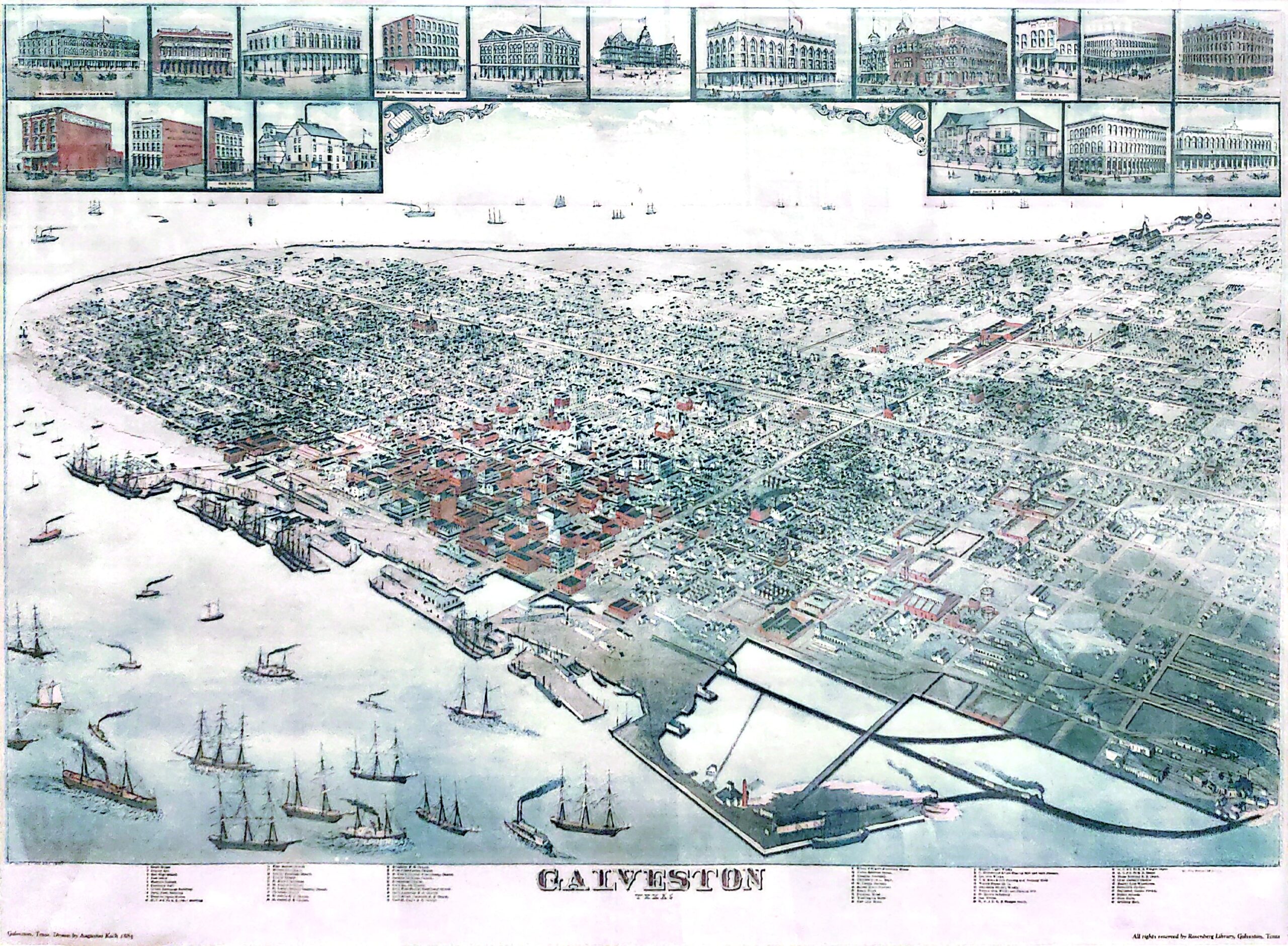
    There was also a birds-eye view map of Galveston on the wall that included the Beach Hotel (so between 1882 and 1898). The beach side of the island and the west side of the island was way too empty to justify going back and forth to Texas City. The way I see it, I have three choices:
    1) I can revise everything I’ve written so far to put Gresham Aerospace on the island from the beginning. Pro: It takes care of all the issues from the beginning. Con: It makes it confusing for people who have already started reading Artemis Rising and it is a lot of work.
    2) I can have the Gulf, Laredo, and Veracruz Railroad at least decline developing the Aero/Aether port in Texas City and force the move when Gresham Aerospace makes their expansion in Antarctic Honeymoon. Pro: Allows Artemis Rising, Mirim for the WIN, and almost all of what is written so far for Antarctic Honeymoon to stand as written. It also puts Galveston right next to the Aetherport which will be important later. Con: the facility is on the unraised island during the 1900 hurricane. It also adds some complication to the Antarctic Honeymoon story (which may be more of a mixed Pro/Con – richer story/more work).
    3) Move the facilities from a ruined Texas City location to Galveston. Pro: This can include a raising of the level of the ground post hurricane and it makes some sense in trying to revitalize Galveston after the destruction of the Hurricane and such. Con: I’m pretty sure the Texas City area has a lot less destruction from the 1900 hurricane than Galveston did – moving from Texas City to Galveston would stretch credibility a lot.

    Toured Bishop’s Castle and Moody Mansion. Bishop’s Castle is the name given to the Gresham’s house, Gresham Castle in the books, after the Bishop of Galveston took up residence there. Moody Mansion was the name given to the mansion built by Narcissa Willis when William Moody, Jr. bought it just after the 1900 hurricane. Narcissa had the mansion built in part because she had pestered her husband to build them an opulent house their entire married life, in part to try to draw her children back to Galveston, and in part to upstage her sister, Magnolia Willis Sealy, mistress of Open Gates just two blocks down Broadway. She upstaged her sister for a very few years, got her opulent house at the cost of not having the money to keep it up, and since that estranged her from her children, failed to get them to return to Galveston. In fact, William Moody got the mansion for about five cents on the dollar in a bid he put in before the hurricane.

    Learned that Broadway is where it is because that was the “ridge” of highest ground (8 feet above sea level) down the center of Galveston Island when the city grid was laid out. At the time of the books, it consisted of a single lane road in either direction and a broad esplanade down the center. Most roads in Galveston at that time are paved in crushed shells.

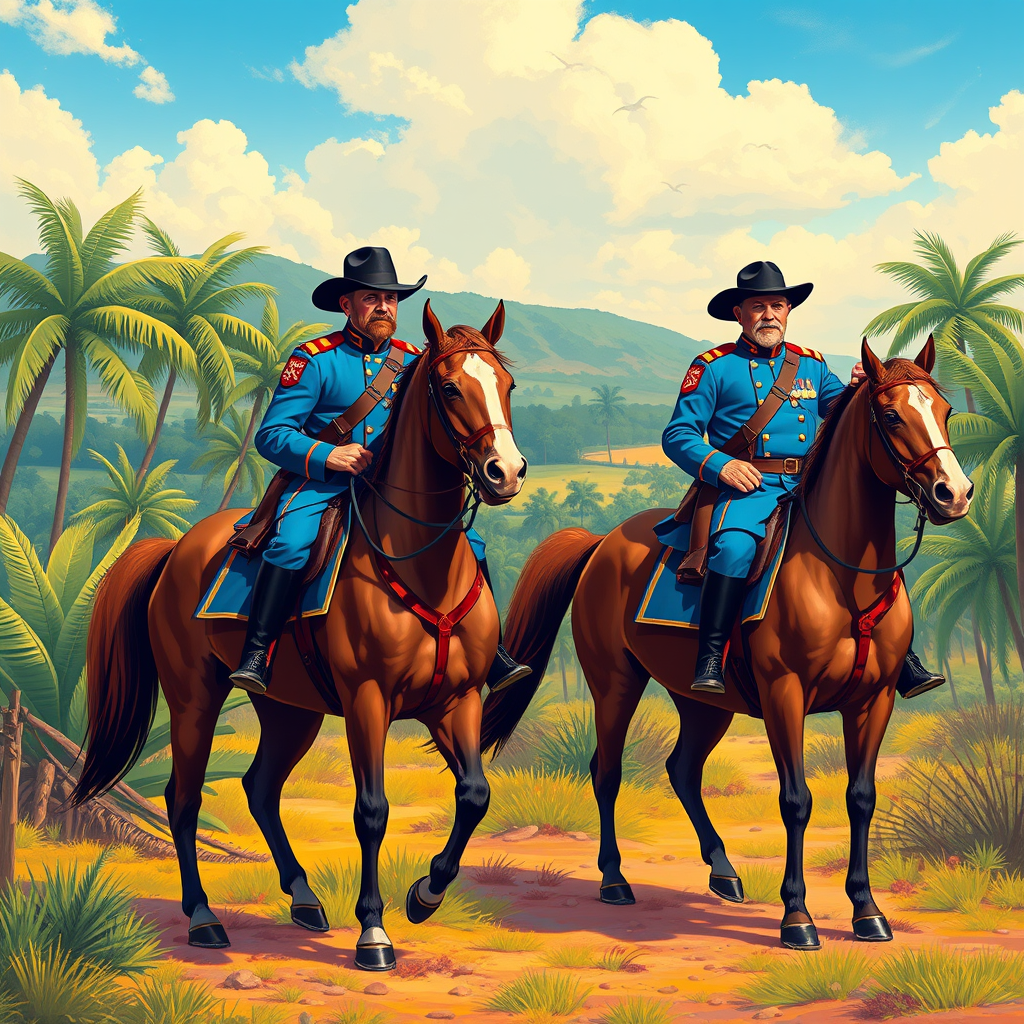
    I did figure out how to make some decent AI generated pictures of the various Embassies. I’m not sure it will work for the Hall of the American Commonwealth, I’ll have to try that next.

    This week was mostly consumed with research in Galveston. Learned a lot and need to integrate it into Mirim for the WIN, as well as later books. That will probably slow down progress on Antarctic Honeymoon for a while.

    Chapters this week:
    27: American Geographic Society – progress
    Mirim Chapter 1 rewrite

    Antarctic Honeymoon word count is 53,807, less than 800 words more than last week, not counting Dramatis Personae (2,268 words)

    If you want to be a beta reader and comment on these chapters, write a nice review for Artemis Rising on Amazon or Goodreads, and email me that you’ve done it.

  • Victorian Planetology

    Victorian Planetology

    During the early history of “speculative fiction”, Jules Verne, H.G. Wells, and Edgar Rice Burroughs postulated that all or most of the inner planets were, more or less, hospitable to life. Mars was a desert world, long dying for lack of water. Venus was a jungle world, its cloud-covered face hiding jungles that often housed dinosaurs. It was even speculated that a fifth planet, Vulcan, once lay between Mars and Jupiter. Since this makes for a much richer storytelling setting, and the stories are set in the late 19th century, this is true for my inner planets as well

    Mercury’s World River

    Mercury is tidally locked to the Sun, but that doesn’t keep it from having water, atmosphere, and life. A constant, cold to cool wind from the cold side blows along the surface with an equally constant hot to warm wind aloft returning the air from the hot side. A deep, broad valley circles the twilight zone between them.

    Jungles of Venus

    The clouds of Venus are water clouds and the surface is a hot, muggy jungle. Saurian leviathans rule the air, land and sea, making exploration difficult – and that is before considering the bloodthirsty lizard people

    Earth, With Bonuses

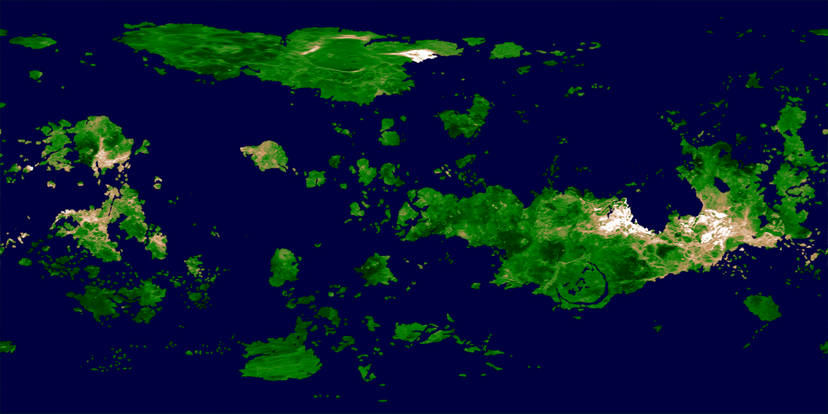
    Our own planet is, mostly, the same. But with all the cool things on other worlds, there have to be mysterious islands, lost civilizations, evidence of ancient bases from peoples of the other planets, and other story elements still to be found. Who knows, maybe a voyage to the center of the Earth is possible…

    Moon – Scars of Conflict

    Not all of those craters on the moon were from natural meteorite impacts. Thousands of years ago, there was a War in Heaven that almost destroyed the numerous moon bases and instillations. Almost…

    Mars And The Elves

    Mars has canals. Mars also has the mightiest volcanoes in the solar system. And the people of Mars, both those living in the baroque civilizations of the canal queendoms, and the raiders who venerate the millennia-old trans-atmospheric fighters on static display, are human – except for the pointed ears…

    Lost Vulcan

    The Asteroid Belt is has about 20 times the mass of the belt in real life. It is also far less evenly spaced, most of the asteroids being in the quadrant centered on the ancient moon Ceres. But the closer one comes to the heart of the Vulcan debris field, the more… haunted it becomes.

  • Aether

    Aether

    Luminiferous aether

    Luminiferous Aether, or Aether for short in this setting, was supposed to be the medium that light waves propagated through. It made sense that in the same way sounds waves propagated through air (or other media), and water waves propagated through water, light waves propagated through some medium that we had yet to identify. In real life, this idea didn’t have strong experimental evidence against it until 1887 when Albert A. Michaelson and Edward W. Morley ran their famous experiment. Like a well-crafted experiment, it was set up so that the results would fairly conclusively either support the existence of Aether, or not support it. Of course in this world, Michaelson and Morley discovered a difference in the relative speed of two beams of light travelling at right angles to each other.

    Aetheric Propulsion

    As an outgrowth of there being aether, this world has two inventors who have discovered two different methods of aetheric propulsion. Basically this allows for steampunk spacecraft. There is no way steam engines, even if extremely advance, could provide motive force in space. And it isn’t any fun to require months or years to travel between planets. By making aetheric propulsion machines (without a lot of detail), I can have them provide any needed capability to allow late 19th century technology to safely traverse the void between worlds.

    The Inventors

    When coming up with who would invent aetheric propulsion, I looked at actual inventors of the time. Edison was an obvious choice. The Wizard of Menlo Park could have easily added an Aetheric Impeller to his vast array of inventions. Once I had him invent the first method of aetheric propulsion, a rival inventor was equally obvious.

    Nikola Tesla was an absolute genius, and about as different from Edison as he could be. Edison was self-taught, and basically battered at a problem, trying one idea after another, until he figured out something that worked. Tesla was a university trained engineer/physicist who could (and did) calculus in his head. His approach was to consider a problem in minute detail for long enough that, often, the plan for a complete, or near complete, mechanism would spring to his mind, only requiring the calculations and possibly minor tweaking to turn into a blueprint suitable for manufacturing.

    With those two as the inventors, a “Battle of the Aetheric Propellors” similar to the historical “Battle of the Currents” was an obvious next step. This is why Walter and Nikola are brought together by George Westinghouse, whose company lead the way in building the machines for alternating current electrical infrastructure, while Nikola was working for him.

  • Alternate History

    Alternate History

    A fundamental part of my worldbuilding is that these stories are set in an alternate Victorian era. I try to use actual history and historical people as much as possible. When something I’ve changed makes a historical person or event untenable as they actually were, I try to change things in a way that makes as much sense as possible, and, mostly, allow the alternate history to drive the story. If I really want the story to go in a particular direction, I’ll tend to go back and modify things in the “past” (from the point of view of that story) so that my desired story direction makes logical sense.

  • Victorian Interplanetary

    Victorian Interplanetary

    Telling Stories Again

    I’ve decided not only to start telling stories again, but to do it in my own setting instead of a fan fiction/crossover in someone else’s world. I won’t throw away the notes and ideas for the Harry Potter/Jack Ryan crossover, but I’m too excited by the potential stories in the Victorian Interplanetary setting instead.

    There are several premises I’m using to inform the worldbuilding on this, and I am trying to do enough worldbuilding that I don’t write myself into a corner. I think that is kind of what happened with J K Rowling’s Harry Potter series. She did only enough world building to serve the story line at that time. I perfectly understand why. When she started out, she was scratching out time to write while trying to make a living – not conducive to spending a lot of time worldbuilding, especially if you are new to the idea.

    On the other hand, I’ve done worldbuilding for numerous RPG campaigns in several different genres, and built on the RPG campaign worldbuilding, whether well done or not, for several others. I’ve also played in numerous campaigns that others gamemastered. Some of them had good worldbuilding, some had horrible worldbuilding, some took decent published worldbuilding and built on it, some took decent published worldbuilding and broke it anyway. I’ve even seen gamemasters that took a campaign with decent worldbuilding that they then threw out any pieces that didn’t fit, and made something better.

    All that to say, I’m going to try to put together a setting with good worldbuilding. Worldbuilding that supports the story I’m working on, while minimizing the constraints on other stories that might be told later (sequel, prequel, or taking place at the same time in another part of the solar system). We’ll see where that goes…

    Enough about what I’m trying to do. The next few posts include some of the elements of the worldbuilding in this setting.