Artemis Rising is #1,224 in Steampunk Fiction (Kindle Store), #1,368 in Steampunk Fiction, and #3,293 in Alternative History. I got a 3rd customer review, still need a few more to get Audible to take notice – if you’ve finished the book and haven’t left a review, please do so.
Submitted the new book 2 to Sandra, my editor. It may be a while before she can get to it. She’s a very good (and popular) editor. It’s better for her to have the manuscript and wait to get the time than have the time and be waiting on the manuscript. Hopefully I’ve fixed the issues and we can get this published by the end of the month or early September. Still need a good title for it. I did have another idea: Cutting In at the Presidents’ Ball. What do y’all think?
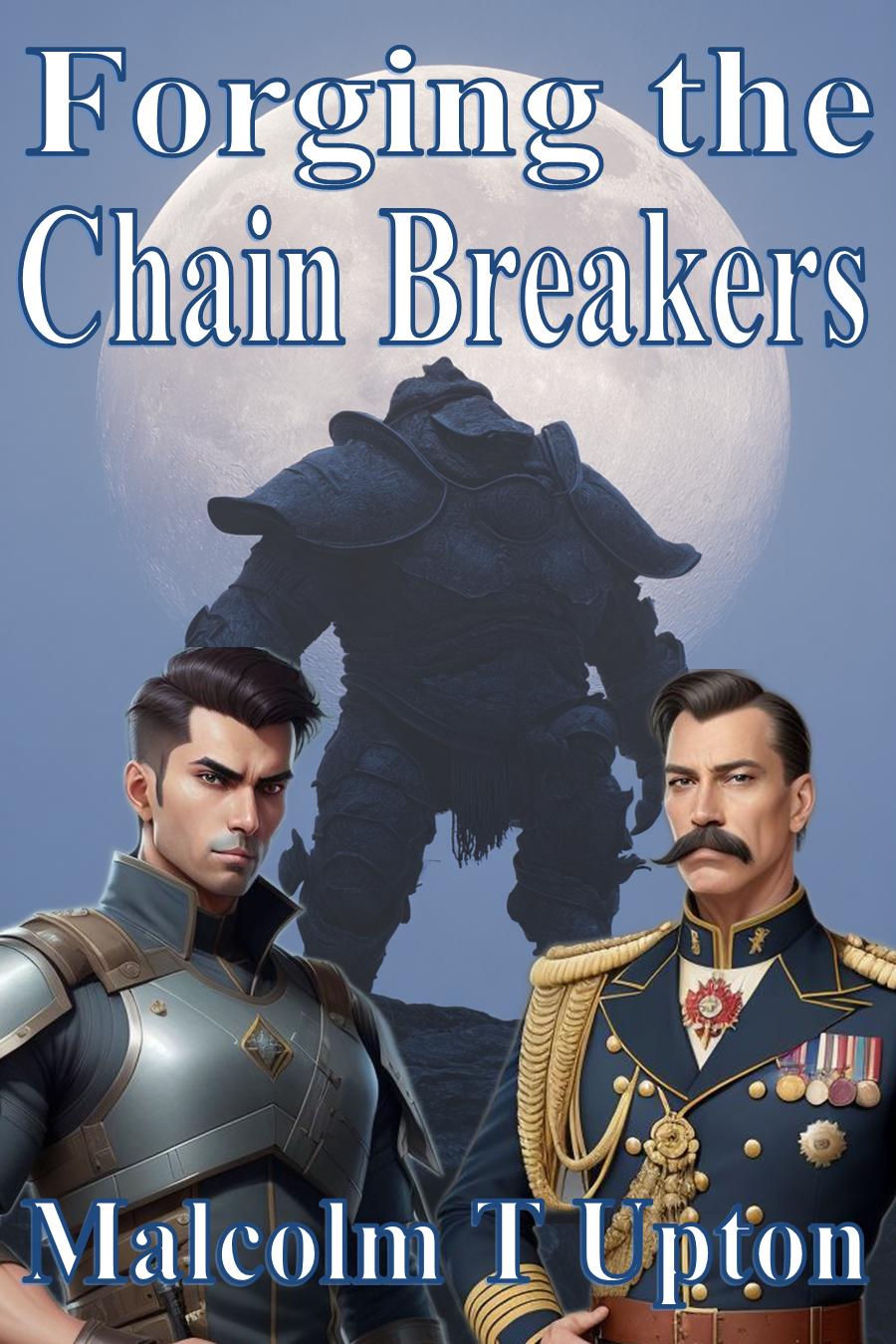
Started working on Book 3 which is now Forging the Chain Breakers. Since I was able to pick up a lot that was edited out of either Mirim for the WIN or Antarctic Honeymoon, I’ve made a lot of progress by just touching up chapters picked up from the cutting room floor, so to speak. Chapters 1-21 are essentially the same as chapters written earlier for either Book 3 or some other story. 21 had extensive changes to the final board meeting.
Chapters this week: Preface: Sinister Success 1: To Business 2: Gresham Steamship Company 3: Cotton Exchange and Board of Trade 4: Financial Setback 5: Firearms and Electromagnetic Weapons 6: I Guess Your Budget Is “Yes…” 7: Tea, Bolivia, and Pilot Training 8: But First, New York 9: A Preacher, a Feminist, and a Sorceress Go To Tea… 10: 15 Union Square West 11: Breakfast At Tiffany’s 12: Dinner Plans 13: Winchester Repeating Arms 14: Coltsville 15: Preparing For Dinner 16: Dinner At Delmonico’s 17: What’s Next? 18: Engaging Management 19: Talk With Browning 20: Gresham Steamship Board 21: At This Meeting of the Board… – in progress
Forging The Chain Breakers word count is 41,143, not counting Dramatis Personae (1,695 words)
Artemis Rising is #993 in Steampunk Fiction (Kindle Store), #1,158 in Steampunk Fiction, and #2,655 in Alternative History. There are still just 2 customer reviews – if you’ve finished the book and haven’t left a review, please do so.
I’m getting some readers in Kindle, so that is encouraging.
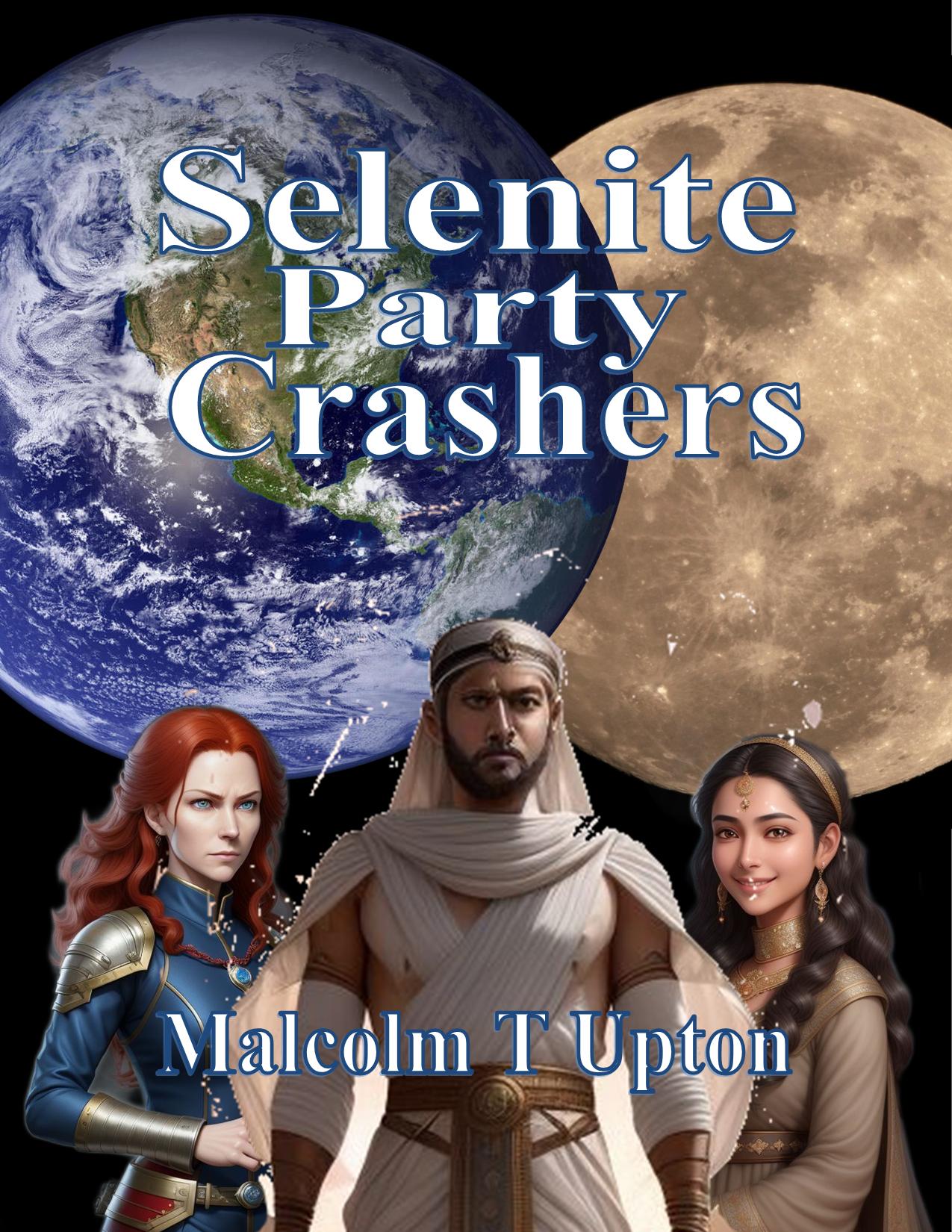
As I mentioned last week, the rewrite of “Mirim for the WIN” is so major, the book will be getting a new title and cover. I’m currently considering “Selenite Party Crashers”. I plan to send the new version of the manuscript to Sandra for editing by the end of the week.
The problem with “Mirim” was that there wasn’t enough conflict/setback for the story to be very interesting. In an effort to avoid that problem in the future, I reviewed the plan for the future books with an eye toward what the conflicts/setbacks would be for each story. That changed the focus of the stories some, changed the timeline a lot, and spurred a change in the book titles and order. There are now eight books in the immediate series with “Beware the Wrath of Magi” being added.
A pleasant side effect of the reorganization was that the planned books aren’t as intertwined. Instead of “Antarctic Honeymoon” being next, “Forging the Chain Breakers” will be next, focusing on military and political preparation for freeing the Moon. Bad news – Plan A will be delayed until at least 1893, maybe much later if the Robber Baron has anything to say about it. Good news – Plan B may have the Moon free by the end of 1891…
Artemis Rising is #885 in Steampunk Fiction, #3,063 in Alternate History Science Fiction (Books), and #5,415 in Exploration Science Fiction. There are still just 2 customer reviews – if you’ve finished the book and haven’t left a review, please do so.
I’m getting some readers in Kindle, so that is encouraging.
Still working on the changes to Mirim. I’m thinking of calling the new book “Moon Comes To Earth” or “Envoys and Ambassadors” unless I can find something better. Mirim for the WIN is just too obscure and Mirim looks too young until you read that she is actually 45 and just looks that young. I need a better title and cover to draw people into reading the blurb. I need a new blurb as well, I guess.
First pass complete for Chapter 21 to the end. Completed the second pass for the full book as well. It expanded to over 86,000 words and from 24 to 30 chapters.
Artemis Rising is #734 in Steampunk Fiction, #2,690 in Alternate History Science Fiction (Books), and #4,882 in Exploration Science Fiction. There are still just 2 customer reviews – if you’ve finished the book and haven’t left a review, please do so.
To make the changes necessary to give Mirim for the WIN a story, I’m going to need to make at least two passes through the story. The first one will focus primarily on addressing the ‘tactical’ level editing issues. The second one will focus on fixing the ‘strategic’ level issues. I may need a third pass to make sure it all fits together correctly. Then it will be back to Sandra.
I’m thinking it will need a new title as well. Mirim will be a major character, but Elisha and Ima and their struggle to get some official support, even if they can’t get official recognition, from the American Commonwealth will be important.
First pass complete for Chapter 1-21, this includes adding more than 10,000 words and two chapters.
If you want to be a beta reader and comment on these chapters, write a nice review for Artemis Rising on Amazon or Goodreads, and email me that you’ve done it.
Artemis Rising is #1,162 in Steampunk Fiction, #3,967 in Alternate History Science Fiction (Books), and #6,602 in Exploration Science Fiction. There are still just 2 customer reviews – if you’ve finished the book and haven’t left a review, please do so.
I realized some additions to Mirim for the WIN need to be made to clarify the size of the challenge, as seen from Mirim and Elisha’s point of view. Elisha is, essentially, the headman of a village tasked with representing all the people of the Moon (less than 100 thousand) to an organization that has multiple countries with millions or tens of millions of people. Mirim, for all her skill, has never attempted working a Women’s Information Network the size of Galveston’s. Mirim has also never worked with women who are wives of diplomats, or even Presidents, of those huge countries. All that is on top of being on a completely alien planet. I guess I didn’t write it because I knew how they would cope, but the reader would have to be able to read my mind to know how they cope. Sandra said she had recognized that, but to wait until she’s made a first pass before I start a significant rewrite like that.
I did go through Mirim for the WIN and Antarctic Honeymoon to look for places to put descriptions of the various locations in Galveston to make the story come alive better. That took up most of my writing time this week.
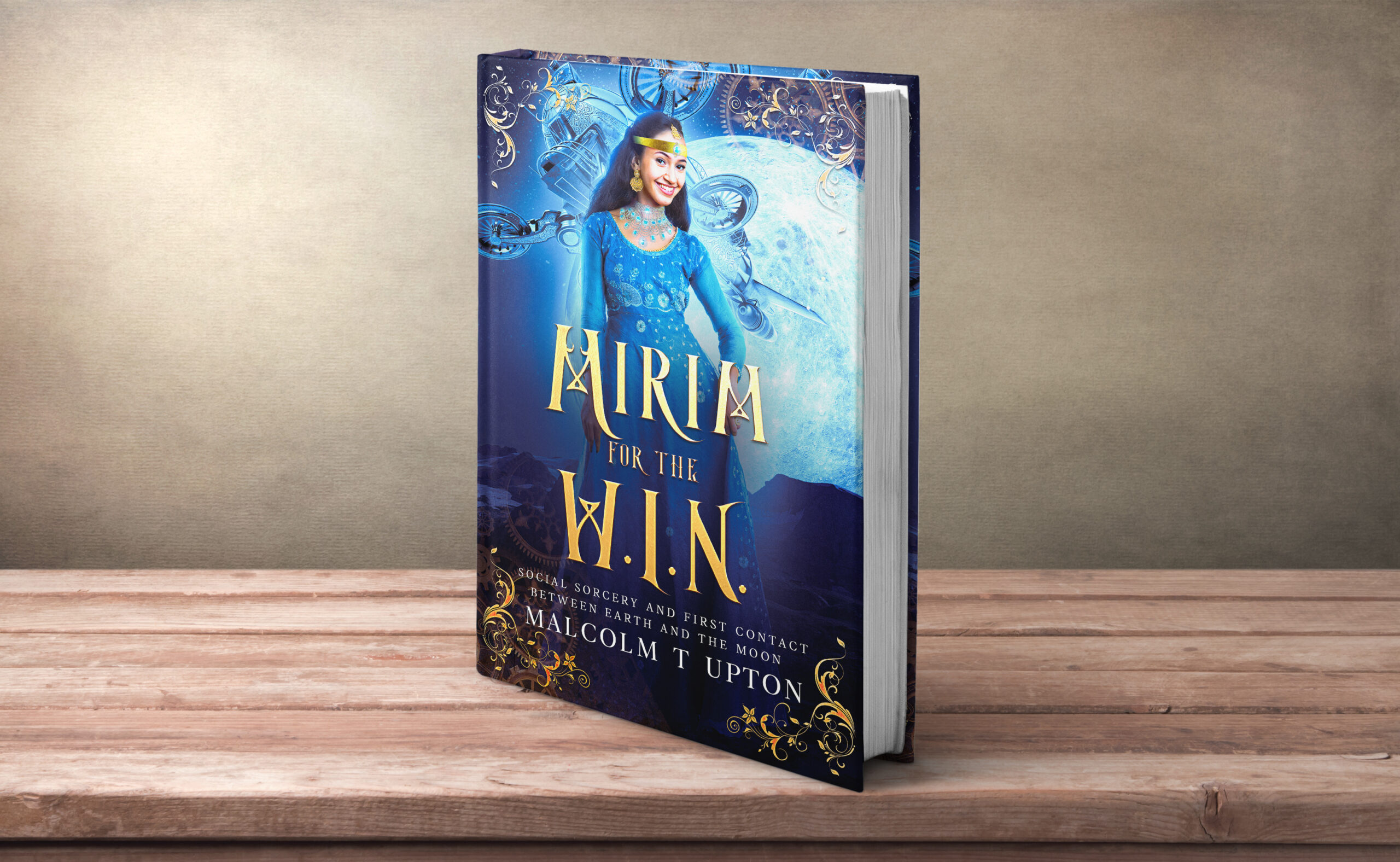
Biggest news last – Mirim for the WIN is a great slice of life, but a very poor story. Everything is too easy and there are no real challenges or setbacks. It also doesn’t really fit into the Steampunk genre because there isn’t really any adventure. It looks like I’m going to need to back up, rethink what I’m doing in the various books in 1891, and try again. I’m not sure yet, but that will probably mean Mirim for the WIN will not be the title of the next book. Work on Antarctic Honeymoon will be suspended until I get Book 2 straightened out.
Artemis Rising is #860 in Steampunk Fiction, #2,344 in Alternate History Science Fiction (Books), and #799 in Steampunk Science Fiction (Kindle Store). There are 2 customer reviews – if you’ve finished the book and haven’t left a review, please do so.
In the late Victorian and Gilded ages, the rich and powerful were more likely to have a custom rail carriage built for them. Kind of like having a yacht or private jet today.
Ran into some major issues with the first chapter of Mirim for the WIN. Essentially I needed to do a complete rewrite. Since I’ve never written the first chapter of a sequel novel, I guess it isn’t surprising that I’m not good at it yet. I ended up adding more than 3000 words making the first chapter over 5,000 – way longer than most of my chapters. I asked Sandra to suggest chapter breaks, but may leave it alone if she doesn’t have suggestions. It made me feel good that I impressed her by getting the rewrite back to her in less than 48 hours.
Saturday visit to Galveston helped me locate a hugely valuable source of information in the Galveston and Texas History Center of the Rosenberg Library. Huge shoutout to Kaitlin and Christina for their help gathering information about Walter and Josephine Gresham, Gresham Castle, John Henry Hutchings and his house.
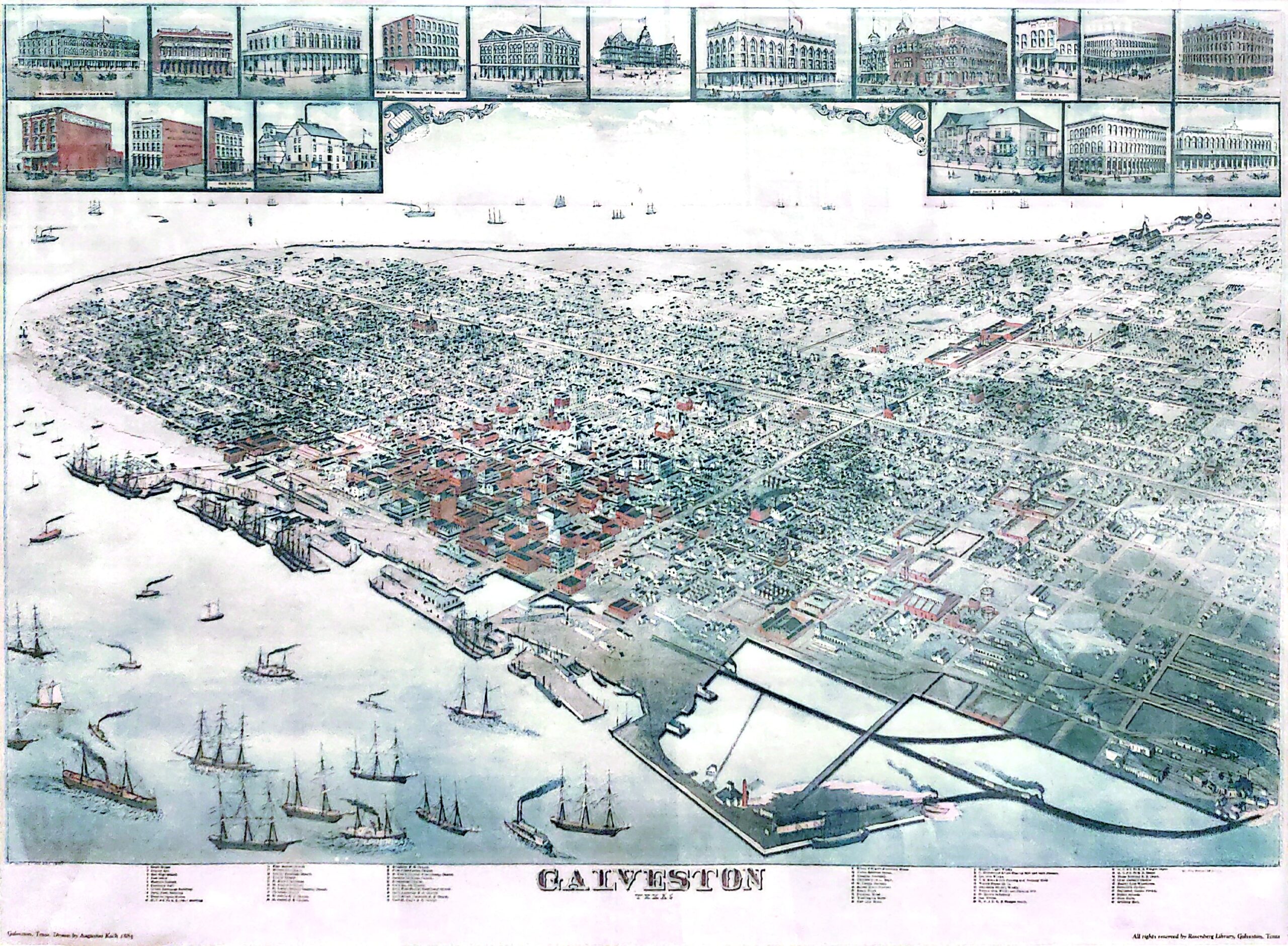
There was also a birds-eye view map of Galveston on the wall that included the Beach Hotel (so between 1882 and 1898). The beach side of the island and the west side of the island was way too empty to justify going back and forth to Texas City. The way I see it, I have three choices: 1) I can revise everything I’ve written so far to put Gresham Aerospace on the island from the beginning. Pro: It takes care of all the issues from the beginning. Con: It makes it confusing for people who have already started reading Artemis Rising and it is a lot of work. 2) I can have the Gulf, Laredo, and Veracruz Railroad at least decline developing the Aero/Aether port in Texas City and force the move when Gresham Aerospace makes their expansion in Antarctic Honeymoon. Pro: Allows Artemis Rising,Mirim for the WIN, and almost all of what is written so far for Antarctic Honeymoon to stand as written. It also puts Galveston right next to the Aetherport which will be important later. Con: the facility is on the unraised island during the 1900 hurricane. It also adds some complication to the Antarctic Honeymoon story (which may be more of a mixed Pro/Con – richer story/more work). 3) Move the facilities from a ruined Texas City location to Galveston. Pro: This can include a raising of the level of the ground post hurricane and it makes some sense in trying to revitalize Galveston after the destruction of the Hurricane and such. Con: I’m pretty sure the Texas City area has a lot less destruction from the 1900 hurricane than Galveston did – moving from Texas City to Galveston would stretch credibility a lot.
Toured Bishop’s Castle and Moody Mansion. Bishop’s Castle is the name given to the Gresham’s house, Gresham Castle in the books, after the Bishop of Galveston took up residence there. Moody Mansion was the name given to the mansion built by Narcissa Willis when William Moody, Jr. bought it just after the 1900 hurricane. Narcissa had the mansion built in part because she had pestered her husband to build them an opulent house their entire married life, in part to try to draw her children back to Galveston, and in part to upstage her sister, Magnolia Willis Sealy, mistress of Open Gates just two blocks down Broadway. She upstaged her sister for a very few years, got her opulent house at the cost of not having the money to keep it up, and since that estranged her from her children, failed to get them to return to Galveston. In fact, William Moody got the mansion for about five cents on the dollar in a bid he put in before the hurricane.
Learned that Broadway is where it is because that was the “ridge” of highest ground (8 feet above sea level) down the center of Galveston Island when the city grid was laid out. At the time of the books, it consisted of a single lane road in either direction and a broad esplanade down the center. Most roads in Galveston at that time are paved in crushed shells.
I did figure out how to make some decent AI generated pictures of the various Embassies. I’m not sure it will work for the Hall of the American Commonwealth, I’ll have to try that next.
This week was mostly consumed with research in Galveston. Learned a lot and need to integrate it into Mirim for the WIN, as well as later books. That will probably slow down progress on Antarctic Honeymoon for a while.
Chapters this week: 27: American Geographic Society – progress Mirim Chapter 1 rewrite
Antarctic Honeymoon word count is 53,807, less than 800 words more than last week, not counting Dramatis Personae (2,268 words)
If you want to be a beta reader and comment on these chapters, write a nice review for Artemis Rising on Amazon or Goodreads, and email me that you’ve done it.
Artemis Rising is #351 in Steampunk Fiction, #1,384 in Alternate History Science Fiction (Books), and #1,436 in Steampunk Science Fiction (Kindle Store). There are 2 customer reviews – if you’ve finished the book and haven’t left a review, please do so.
More progress on Antarctic Honeymoon. Mirim for the WIN has finished its first week in developmental editing. I’m getting prepared for a research trip to Galveston, Texas – although I was recently informed that we needed to do more than just research. Finally, I learned a lot of interesting tidbits, most of which may never get into the books directly.
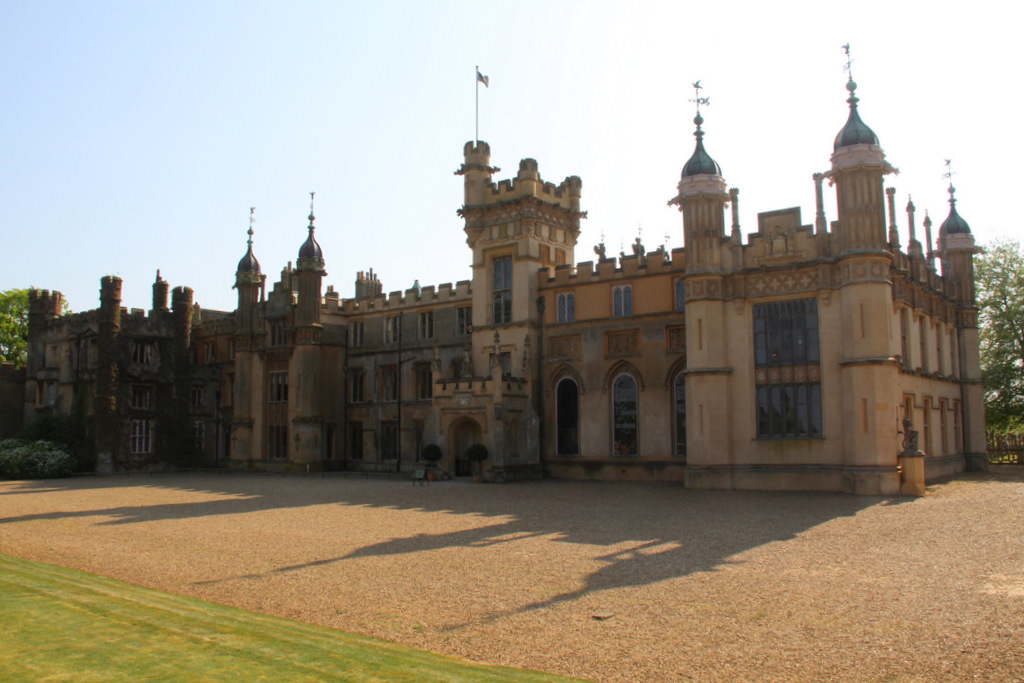
Eleanor’s probably father, Lord Edward Bulwer-Lytton, was the most famous of the residents of Knebworth House. Knebworth House is an English country house in Knebworth parish of Hertfordshire in England. It has been home to the Lytton family since 1490.
Added John Moses Browning to the Dramatis Personae. No changes to the amazing historical person. He was one of the most important firearms designers in history, Moses Browning held 128 patents for firearms in his lifetime, including patents on designs that laid the basis for many modern firearms. This includes gas operated semi-automatic actions which are used in almost all semi-automatic and automatic firearms, and the .50 caliber ‘ma deuce’ machine gun, possibly the most widely used machine gun in history. Last I heard, .50 caliber BMG (Browning Machine Gun) was the single most used ordinance in the history of the US Air Force.
Also got to use the origin story of Browning’s gas operated mechanism idea. In the 1890’s he was testing a rifle and noticed the muzzle gasses pushing back the vegetation nearby. From there it was only a question of how to harness the energy from those gasses to work the mechanism.
Did some more research on the business elite of Galveston in the 1890’s and realized that Thomas wouldn’t have been engaged to Abby Kempner – her father, Harris Kempner, was an Ashkenazic Jew from Poland. A Jewish man, born in the Russian puppet state of Poland, on the border of Prussia, speaking Yiddish as his first language, wouldn’t have allowed an Episcopalian to marry his daughter. So I switched the birth order of John Henry Hutchings youngest two children and Thomas Gresham is engaged to Rey Sealy Hutchings instead.
Many of the people on the various boards in Chapter 26 were historical people. George Sealy, Frank’s future father-in-law, and John Henry Hutchings, Thomas’ future father-in-law, are on the board of both the GL&V Railroad and Gresham Aerospace. Col. Moody is on the boards of the Gulf, Laredo, and Veracruz Railroad and Gresham Steamship Company. George Brakenridge of San Antonio, Texas, Isaac Garza Garza of Monterrey, New Leon, and Francisco Yturria of Matamoros, Tamaulipas are on the board of the Gulf, Laredo, and Veracruz Railroad. Manuel Carrillo, Tia Dolores’ father, is on the board of Gresham Steamship Company. Henry Rosenberg is on the board of Gresham Aerospace.
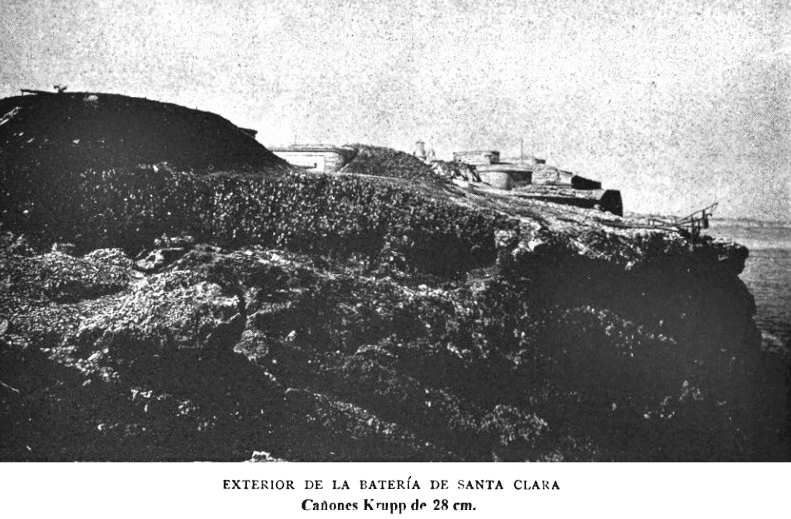
In the 1890’s the approaches to the Port of Havana were defended by a bunch of shore batteries. Even though the United States of the West Indies have been free from Spain for about 30 years, I figure the batteries probably still have guns in them. That means the Bateria de Santa Clara can add some local… color to Chapter 26.
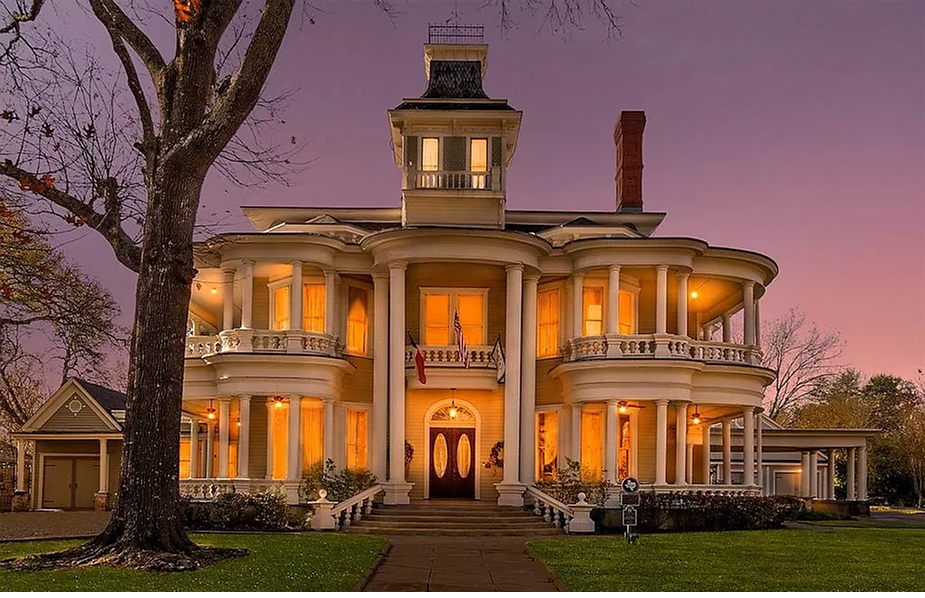
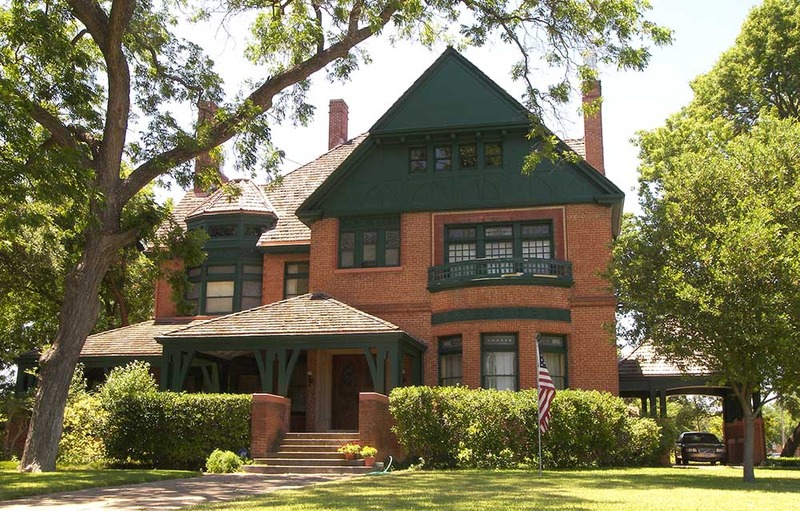
Finally decided on specifics for the houses the Selenites get to stay in while in Galveston. I finally realized that instead of trying to shoehorn the Selenites into one of the famous houses in Galveston, I could just “cut and paste” some houses from the same time period into “blank places” in Galveston. Therefore, at the end of Chapter 8, they acquire two properties, neither of which were in Galveston, but both of which existed in Texas in 1891. The Keeper House was placed at 1702 Ball and is copied from the Rotan-Dossett House from Waco. The Selenite Embassy was placed at 1502 Broadway and is based primarily on the Cartwright House in Terrell, Texas. The Cartwright House really does look like an Embassy, especially after the Selenites put in leukos-powered electric lights like the modern Cartwright house has.
I organized the Walter’s Galveston document ahead of travelling to Galveston this weekend to do some scouting on the ground. I plan on getting some pictures of some of the buildings that still exist and see about getting pictures from the Rosenberg Library for some of the rest of them. I’ll also be meeting with Jami Durham at the Historical Society who was very helpful in getting a feel for the Gresham family.
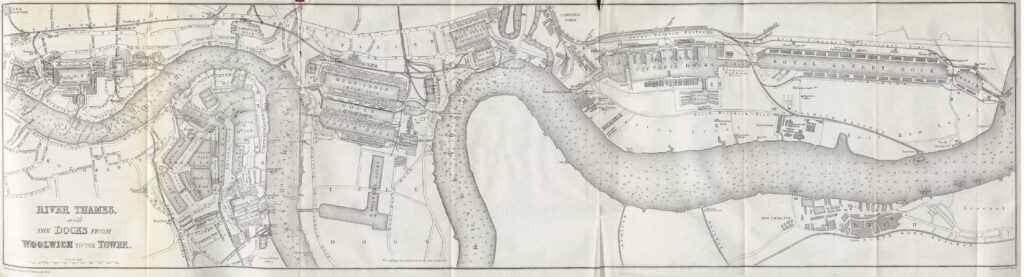
Had to figure out where at least a couple of the aero/Aether ports would be. So one is in the New York area (where Edison Aetherics builds all the aetherships before the Tesla Drive) and another is in London. The Royal Victoria Aeroport lies between the Royal Albert Dock on the north and the Woolwich Railway on the south.
Some of you may recognize the symbol of the American Geographic Society. It is the same as the symbol for the Interplanetary Geographic Society Press. It has corn sheaves (corn is native to Central/North America) and an uncommon world map projection called a Berghaus projection or Berghaus star. The particular one used has North America and the American Sea prominently displayed. The American Geographic Society, based in Havana, West Indies, will become the Interplanetary Geographic Society at some point. Two other organizations similar to the American Geographic Society were the Royal Geographic Society in Great Britain, and the Smithsonian Institute in the United States. The famous National Geographic Society was founded in 1888, but is still fairly new and not as well known.
Chapters this week: 25: Talk With Browning – finished 26: This Meeting of the Board 27: American Geographic Society – started
Antarctic Honeymoon word count is 53,133 not counting Dramatis Personae (2,268 words)
If you want to be a beta reader and comment on these chapters, write a nice review for Artemis Rising on Amazon or Goodreads, and email me that you’ve done it.
One of the oldest catalogues of lunar craters is Charte der Gebirge des Mondes by J.F.J. Schmidt. This is the book that Thoma scanned and sent to Crystal Keep for them to use in updating their map of the lunar surface and placing Earth names on features.
Sent Mirim for the WIN to my editor, Sandra for editing. If it doesn’t need too much work, maybe it will be published by the middle of July.
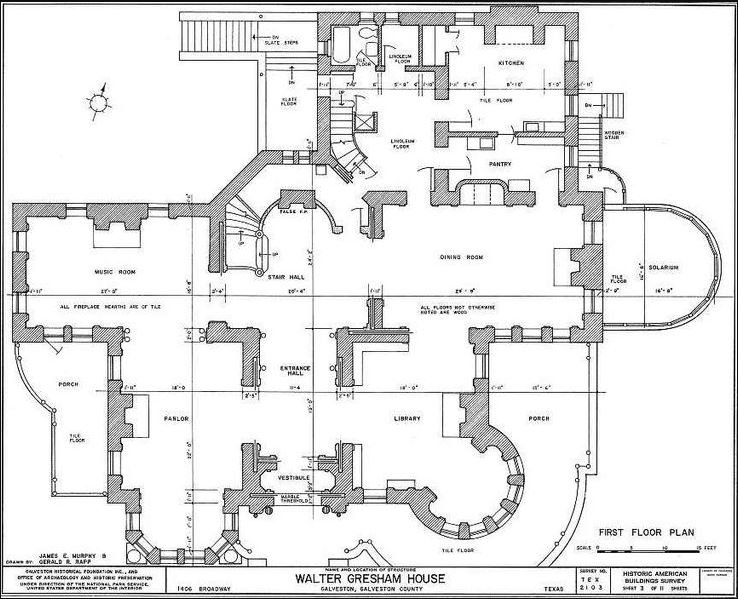
For one of the scenes this week I needed to know the layout of the first floor of Gresham Castle. I believe this image is from the original plans.
I needed a caller on Beulah in addition to Nasir. There wasn’t a lot of information about him, but I decided to base him on the man who married Beulah in real life. Carl Oakes (m) – based on the historical husband of the historical Beulah Gresham, he, too is 9 years older than in real life. His appointment to the Military Academy (West Point) is a deduction based on the one picture I found of him.
In Mirim for the WIN, there is a discussion of term limits and the Aruns tell everyone that their leadership serves only a one (Vulcan) year term, a bit more than four and a half Earth years, before having to take a break before serving in the top leadership positions again. Come to find out, incumbent Governors of Virginia can’t run for re-election either. Since the legislators can run as many times as they want, that means the Governor only has a year or two to get much done before becoming a lame duck. Not surprisingly, Virginia has had only two governors serve a second term since that became an option in 1830. Since the legislators can run as many times as they want, the executive is much weaker in Virginia. If we tried to impose the same limit on Presidents now, that would probably put too much power in the hands of the massive, unelected, federal bureaucracy. If it were put in place prior to the individual income tax and the FDR or Johnson expansions of the bureaucracy, maybe that would work. Hmmm…
Chapters this week: Engaging Management Return to the Moon – finished Shadowed Sunshine The Search Talk With Browning – started
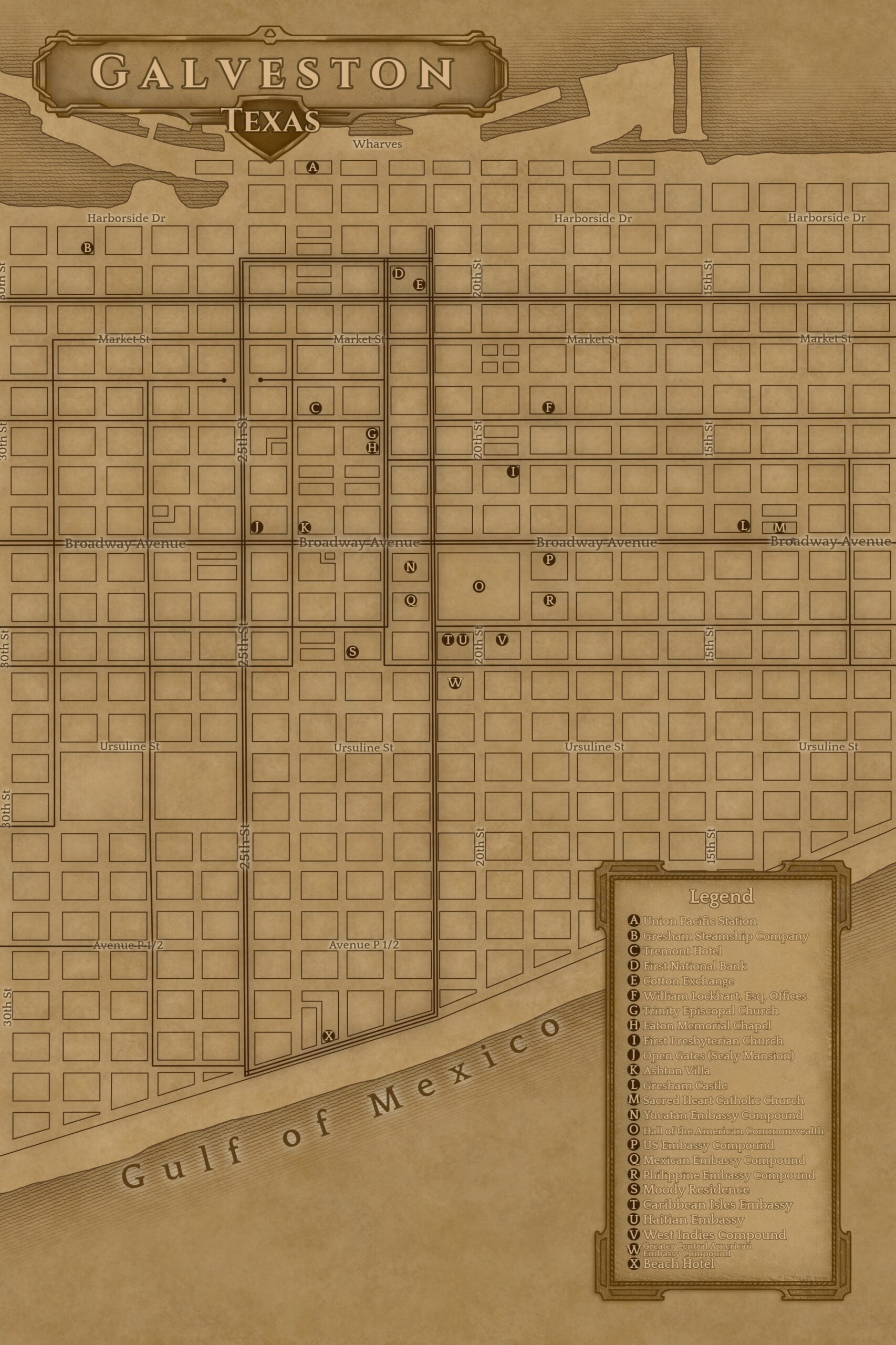
I ordered a map of Galveston for Mirim for the WIN the first one came in and it looks excellent. If the second doesn’t look significantly better, Tomas’ map will be the one in Mirim for the WIN.
Box magazines, the ancestors of those used on modern assault rifles, were invented in the late 19th century. Starting in 1888, the British army used the Lee-Metford rifle, a box magazine, bolt-action, firearm, as their standard issue firearm. Drum magazines holding 50 to 100 rounds of ammunition were around at the end of the 1800’s as well. Looks like the Aruns won’t need to introduce Browning to magazines…
Browning Brothers had their building on 25th Street in Ogden, Utah. Artemis will land on the banks of the Weber River and the Major, Walter, and Juan will walk into town.
Found out that Cornell University, Walter’s Alma Mater, may have been the best Engineering School in the United States in 1891. It was known for having a rigorous curriculum and faculty. Commencement was June 18, 1891.
Fastest animal on Earth is the Peregrine Falcon in a dive. They can reach speeds of 242 mph (320 km/h).
I have two reviews on Amazon – good, but I need some more to convince Audible to make an audio book. If you’ve read the book already, and liked it, please leave me a review on Amazon. When I checked on Monday, Artemis Rising was #3,228 in Exploration Science Fiction, #1,581 in Alternate History Science Fiction, and #418 in Steampunk Science Fiction. Only two orders of magnitude to go! J
I discovered something on Kindle. You can enable X-Ray mode. I think it is supposed to provide in-text descriptions of people, places, and things in the book. I figure it is worth a try, so I put notations on a bunch of people and things in Artemis Rising. Let me know if any of you are familiar with X-Ray, or if you find hyperlinks or something in the Kindle version of that book.
Chapters this week: Preparing for Dinner – first part of old Dinner at Delmonico’s chapter Dinner at Delmonico’s – finished What’s Next? Return to the Moon – partial
As you can see above, the cover mockup for Antarctic Honeymoon has been updated. I’ll need to get a photo-realistic image of the Endeavor to replace the AI image on the cover. Anyone know a good spaceship designer?
Found out some about the wives of some of the historical characters in the current story. George Kunz was married to Sophia. Charles Tiffany, founder of Tiffany’s Jewelry, was married to Harriet. J.P. Morgan, who funded a lot of Kunz’s collecting and explorations, was married to Francis who went by ‘Fanny’.
Delmonico’s restaurant in New York City was the epitome of fine dining in 1891. The most famous location at 56 Beaver Street, informally called the Citidel, was closed while Bill, Eleanor and Mirim were visiting Tiffany’s. Instead there were only two locations, one at 22 Broad Street that served the financial district, and one at 5th Avenue and 26th Street. Even though J.P. Morgan was hosting the dinner, I figured it was an evening affair and, with two locations, one specifically serving the financial district, the 5th and 26th location was more likely to be the fine dining version. Besides, I could find a picture of it.
I also discovered that this Delmonico’s location is right across the street from Madison Square Park, one of the oldest public parks in New York City. At this time the original Madison Square Gardens, a converted depot of the New York & Harlem Railroad, was on the other side of the park from Delmonico’s.
Major Regdar wants the Arun Marines to have firearms in addition to their boarding swords and instead of the cranky and easily damaged coil guns they now carry. To facilitate that they talk to Thomas Grey Bennett, husband of Hannah Jane Winchester, who has been president of Winchester Repeating Arms Company since 1890… Not very long. Thing is, Thomas had been working for Winchester for years and was instrumental in growing the company, especially overseas. This will be interesting. Browning recognized the potential of a gas-powered semiauto weapon when he designed a shotgun using such a mechanism in 1898. He asked Winchester for royalties instead of a single payment for the patent. They refused and that broke the Winchester-Browning relationship until after WW I. What’s going to happen when Browning designs a semi-auto mechanism, or even a machine gun, for the Arun Marines?
The Maxim gun was the top-of-the-line machine gun of the time, and its direct descentant is being used in the current Russia-Ukraine war. It was water-cooled and too heavy and bulky for even an Arun Troll to handle like an assault rifle. But Colt was working with Browning on a gas-operated machine gun.
I’ve commissioned a map of Galveston for Mirim for the WIN. I’ll let y’all know how that comes out.
Chapters this week: Breakfast at Tiffany’s – completed Dinner Plans Winchester Repeating Arms Coltsville Dinner at Delmonico’s – partial